If you’ve scrolled through TikTok comments, opened a group chat, or checked your Instagram DMs recently, there’s a good chance you’ve run into the phrase “ts pmo.” Maybe a friend sent it after a bad day. Maybe you saw it under a video and had no idea what it meant. Either way, you’re not alone in asking what does ts pmo mean in texting.
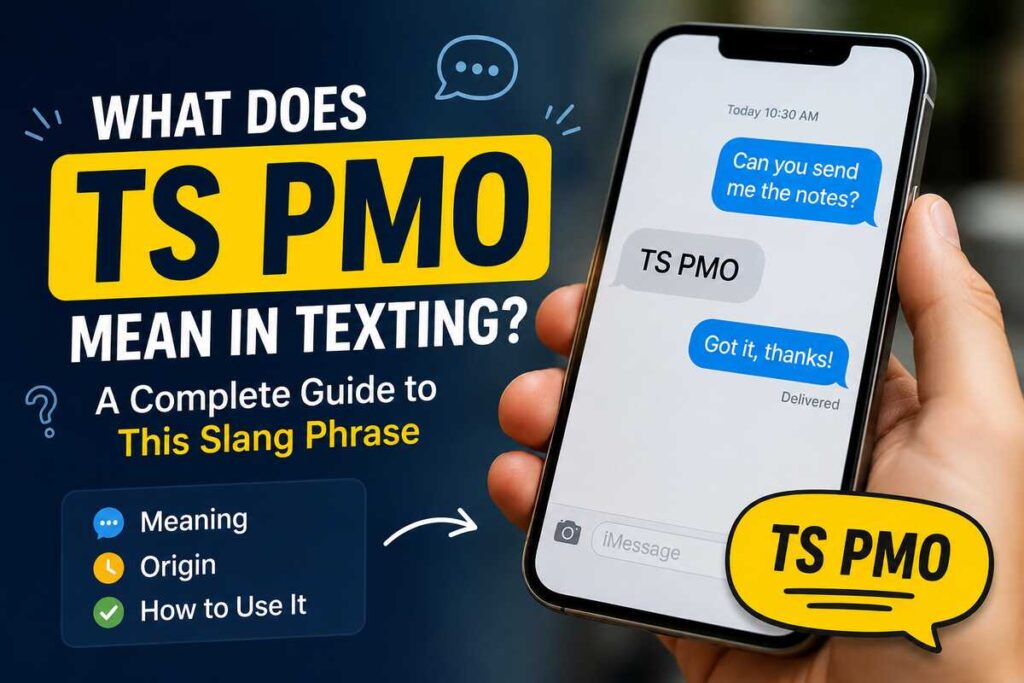
The short answer: ts pmo is short for “this shit pisses me off” (or the cleaner version, “that stuff pisses me off”). People use it to vent about something annoying, frustrating, or irritating, usually in a casual, half-joking way rather than as a serious outburst.
That’s the quick version. But if you want to actually understand how this phrase works, where it came from, and how to use it without sounding out of touch, keep reading. This guide breaks down everything, including the parts most explainers skip.
What Does TS PMO Actually Stand For?
TS PMO is made up of two separate slang abbreviations that got mashed together because people kept using them side by side.
TS stands for “this shit.” Some people write it as “that stuff” when they want a softer, more shareable version. Either way, it’s used the same way you’d use “this” or “that” when pointing at something annoying.
PMO stands for “pisses me off.” It’s been used online for years, long before it got paired with TS, as a quick way to say something is irritating without typing the whole phrase out.
Put them together and you get “this shit pisses me off,” shortened into four letters that fit into a text message, a comment, or a caption without taking up much space.
Also, know What Does PMO Mean in Text.
Why PMO Has a Second Meaning You Should Know About
Here’s where a lot of people get confused, and where most articles on this topic stop short. PMO doesn’t only mean “pisses me off.” It has an older, completely different meaning: “put me on.”
“Put me on” means something closer to “recommend this to me” or “introduce me to this.” You’ll see it in sentences like “put me on to some new music” or “who put you on to that show?” This usage has circulated online for years and is common in music, fashion, and pop culture conversations.
So when you see PMO by itself, context matters. But when it’s paired with TS, the meaning almost always shifts to “pisses me off.” Nobody says “this shit put me on” in casual conversation, so the TS PMO combination locks in the frustration meaning specifically.
Where Did TS PMO Come From?
Slang like this doesn’t usually have one clean origin story, and ts pmo is no exception. Both TS and PMO existed separately as internet shorthand before they got combined. PMO in particular has roots in African American Vernacular English (AAVE), which has shaped a huge amount of internet slang over the past two decades.
The combined phrase started gaining traction on TikTok and Twitter (now X) around 2021 and 2022. Gen Z has a habit of compressing longer phrases into short, punchy abbreviations, and TS PMO fit that pattern perfectly. It was short, it carried real emotion, and it was easy to type quickly under a video or in a text without breaking your flow.
By 2023 and 2024, the phrase had spread well beyond its original circles and became a fairly standard piece of texting slang, especially among teens and young adults.
How People Actually Use TS PMO in Real Conversations
Understanding the definition is one thing. Seeing it in context helps it click faster. Here’s how it typically shows up:
Reacting to a frustrating situation: “woke up to 10 missed calls from my mom, ts pmo”
Venting about something small but annoying: “the store rearranged everything again, ts pmo, i just wanted chips”
Responding when someone asks if you’re okay: “Friend: you good? / You: ts pmo, i’ll explain later”
Reacting to a game or competitive loss: “lost the match because of lag, ts pmo”
Notice that none of these examples describe something genuinely serious. That’s intentional. TS PMO is built for everyday annoyances, not real crises. Using it for something minor is actually part of the joke. There’s a bit of dramatic exaggeration baked into how people use it, which is part of why it caught on.
Is TS PMO Rude or Inappropriate?
This is one of the most common questions people have, and the honest answer is: it depends on where you use it.
TS PMO implies a curse word, even when it’s not spelled out. Because of that, it’s considered informal and mildly crude slang. It’s not aggressive or targeted at anyone specific most of the time, but it’s not polished language either.
Here’s a simple way to think about it:
- Fine to use: texting friends, casual social media captions, gaming chats, group chats with people your own age
- Not fine to use: work emails, messages to teachers or professors, formal writing, conversations with people who might not understand internet slang, customer service chats
If you wouldn’t say “this shit pisses me off” out loud in a particular setting, you probably shouldn’t type the abbreviated version there either. The abbreviation softens the phrase visually, but the underlying words haven’t changed.
Common Mistakes People Make With TS PMO
A few misunderstandings come up often enough that they’re worth addressing directly.
Mistake 1: Assuming it always means extreme anger. Most of the time, TS PMO signals mild to moderate frustration, not rage. It’s closer to “ugh, annoying” than “I am furious.” Reading it as a serious emotional crisis usually misses the tone.
Mistake 2: Confusing it with “text soon, probably.” A few sites have floated this as an alternate meaning, but it isn’t accurate to how the phrase is actually used online. If you see TS PMO in a real conversation, it’s almost always tied to frustration, not a vague promise to reply later.
Mistake 3: Using it in professional or formal contexts. Because it’s short and looks harmless, some people don’t realize it implies profanity. Sending it in a work Slack channel or email can come across as unprofessional even if that wasn’t the intent.
Mistake 4: Overanalyzing it. Slang like this isn’t meant to be picked apart word by word in every conversation. Sometimes it’s used seriously, sometimes it’s used for comedic effect, and reading too much into a single use can lead to more confusion than clarity.
TS PMO vs Similar Slang Phrases
It helps to see how TS PMO compares to other abbreviations you might already recognize, since a lot of texting slang works the same way.
- SMH (shaking my head): signals disappointment or disbelief, but without the same level of implied profanity
- WTF (what the [expletive]): expresses shock or disbelief, often stronger in tone than TS PMO
- IDC (I don’t care): shows indifference, sometimes overlapping with frustration but without the anger
- TS MF PMO: an intensified version of TS PMO that adds extra emphasis, used when someone wants to sound more dramatic
TS PMO sits in a middle zone. It’s more emotionally expressive than something like IDC, but it’s usually lighter in tone than WTF, especially when used about small daily annoyances.
When Should You Actually Use TS PMO?
Since this phrase is casual by nature, using it well comes down to reading the room. A few situations where it fits naturally:
- Venting to a friend about something minor that went wrong
- Reacting to a relatable, low-stakes annoyance online (bad traffic, a canceled show, a slow Wi-Fi connection)
- Joining in on a joke or meme format where exaggerated frustration is the whole point
- Responding quickly in a group chat without needing to explain the full story
It’s less useful, and honestly a bit awkward, when you’re dealing with something genuinely serious. If a friend is going through something difficult, TS PMO can come across as dismissive of the real emotion involved. Save it for the everyday stuff: bad days, small inconveniences, and moments that call for a shrug more than a heart-to-heart.
How to Respond If Someone Sends You TS PMO
If a friend texts you “ts pmo” out of nowhere, you don’t need to overthink your reply. A few natural responses work well:
- “what happened?” if you want more detail
- “lol same” if you relate
- “that’s annoying, you good?” if you want to check in without making it heavier than it needs to be
Since the phrase itself is casual, matching that tone in your response usually feels more natural than responding with something overly formal or concerned.
A Quick Note on Context and Platforms
TS PMO shows up across TikTok, Snapchat, Instagram, X, and regular text messages, but the tone can shift slightly depending on where you see it. In TikTok comments, it’s often reacting to something in the video itself, whether that’s relatable content or something absurd. In direct texts between friends, it tends to be more personal and specific to whatever just happened to that person.
One more thing worth knowing: because PMO on its own can also stand for “Project Management Office” in business contexts, or has an entirely separate meaning in recovery communities related to compulsive behavior, it’s worth paying attention to where you see the term. TS PMO specifically, as a combined phrase, almost always points back to the “pisses me off” meaning discussed here. Isolated uses of PMO by itself require a closer look at context.
Key Takeaways
TS PMO breaks down into two familiar pieces: TS for “this shit” and PMO for “pisses me off,” combining into a quick way to express frustration or annoyance in texting and on social media. It picked up steam around 2021 and 2022 on platforms like TikTok and Twitter and has since become a regular part of casual online communication, especially among teens and young adults.
It works best in relaxed, low-stakes settings, whether that’s a group chat, a caption, or a quick reply to a friend. It’s not built for formal writing, and it’s not meant to carry the weight of a real emotional crisis. Used the right way, with the right audience, it’s a fast, relatable way to say “this is annoying” without needing a whole paragraph to explain it.
If you come across other unfamiliar texting abbreviations in the future, the same approach works well: look at the words behind the letters, then check how they’re actually being used in context before assuming a fixed meaning. Slang changes fast, but the logic behind reading it stays pretty consistent.